Menu

Swollen Baseboards & Trim in Providence – Expert Diagnosis & Permanent Moisture Repair

Atlas Water Damage Restoration Providence specializes in identifying hidden moisture sources causing swollen baseboards and bloated wood trim, then fixing both the symptom and the source to prevent recurring damage.

Slider Image 1
Slider Image 2
Slider Image 3
Slider Image 4
Slider Image 5
Slider Image 7
Slider Image 8
Slider Image 9
Slider Image 10
Slider Image 11

Why Your Baseboards Are Swelling in Providence Homes

You walk past that section of wall every day. The baseboard looks puffy. The paint cracks when you press it. The MDF trim feels spongy under your fingertip. You think it is cosmetic, but swollen baseboards always signal a bigger problem.

Providence homes face a specific moisture challenge. The city sits at the convergence of the Woonasquatucket, Moshassuck, and Providence Rivers. Seasonal flooding, high water tables, and dense clay soil create hydrostatic pressure against foundation walls. That pressure forces groundwater through hairline cracks, saturating the bottom plates and studs behind your baseboards. The wood absorbs the moisture. MDF trim expands rapidly because it is compressed wood fibers, not solid lumber. Paint blisters. Joints separate. You see warped baseboard molding that pulls away from the wall.

Winter compounds the issue. Providence sees freeze-thaw cycles that crack foundation perimeters. Melting snow infiltrates those cracks. By spring, you have moisture swollen baseboards in mudrooms, kitchens, and finished basements. The damage spreads horizontally along the wall cavity because water wicks through drywall paper and wood fibers.

The bloated wood trim you see is the visible symptom. The hidden problem is prolonged moisture exposure, which cultivates mold colonies inside wall cavities and rots structural framing. Water damaged baseboards do not fix themselves. The source must be identified and stopped, or you will replace the same trim every two years.

Why Your Baseboards Are Swelling in Providence Homes
How We Diagnose and Fix Water Damaged Baseboards Permanently

How We Diagnose and Fix Water Damaged Baseboards Permanently

Most contractors replace the trim and repaint. That approach ignores the moisture source. We treat swollen baseboards as diagnostic evidence. The pattern of swelling tells us where water enters, how it travels, and what building components are compromised.

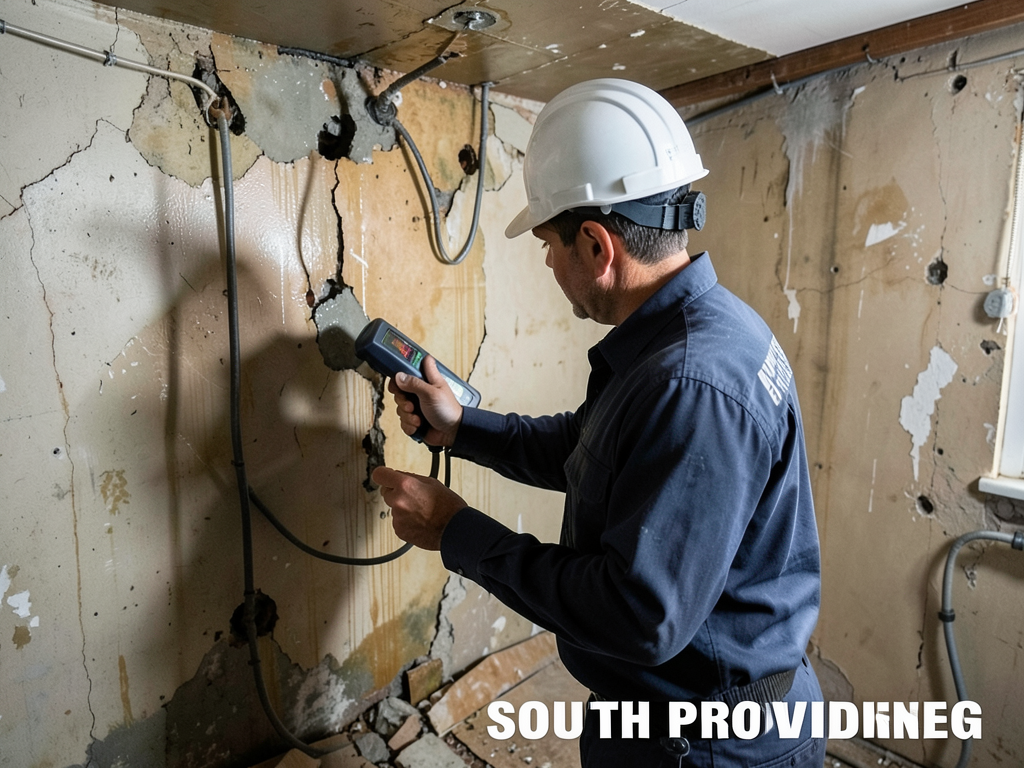
We start with thermal imaging. An infrared camera reveals temperature differentials caused by evaporative cooling. Wet framing shows up as cold spots behind the drywall. We map the moisture gradient from the source to the visible damage. Then we use pin-type and pinless moisture meters to quantify water content in the framing, subfloor, and drywall. Readings above 16 percent indicate active moisture intrusion.

Next, we expose the wall cavity. We remove the expanded MDF trim and cut inspection ports in the drywall at 16-inch intervals to access the studs. This reveals whether the bottom plate is wet, whether insulation is saturated, and whether mold growth is present. We inspect the rim joist, sill plate, and foundation wall for cracks or gaps where water infiltrates.

Once we locate the source, we fix it. That might mean exterior excavation to apply waterproof membrane to the foundation, installing a perimeter drain system, or sealing foundation cracks with epoxy injection. We remove contaminated insulation, treat mold with antimicrobial solutions, and dry the framing with commercial dehumidifiers and air movers until moisture levels drop below 12 percent.

Only then do we rebuild. We install moisture-resistant materials like PVC or primed finger-joint pine trim. We seal all penetrations. We document the repair with post-mitigation moisture readings so you have proof the problem is resolved.

What Happens During a Baseboard Moisture Repair

Swollen Baseboards & Trim in Providence – Expert Diagnosis & Permanent Moisture Repair
01

Source Identification

We use thermal imaging and moisture meters to trace the water intrusion path from your swollen baseboards back to the entry point. This diagnostic phase prevents guesswork. We map the affected area, test moisture levels in framing and subfloor, and identify whether the source is groundwater seepage, plumbing leaks, or exterior drainage failure. You receive a written assessment with moisture readings and photographic evidence before any demolition begins.
02

Controlled Demolition and Remediation

We remove warped baseboard molding and cut access ports to expose wet framing. Saturated insulation is extracted and bagged. If mold is present, we contain the work area with plastic sheeting and negative air pressure to prevent spore migration. Contaminated materials are treated or removed according to IICRC S520 mold remediation standards. We then dry the structure with industrial dehumidifiers and air movers, monitoring moisture levels daily until readings stabilize below 12 percent.
03

Repair and Prevention

After confirming the framing is dry, we address the moisture source. This could involve foundation crack sealing, installing French drains, or regrading soil away from the foundation. We then rebuild the wall cavity with mold-resistant drywall and moisture-resistant trim materials. All seams and penetrations are caulked. You receive final moisture readings, repair documentation, and maintenance recommendations to prevent recurrence. The goal is a permanent fix, not a cosmetic coverup.

Why Providence Homeowners Choose Atlas for Baseboard Water Damage

Swollen baseboards are common in Providence because most homes were built before modern waterproofing standards existed. The East Side, Federal Hill, and College Hill neighborhoods are filled with triple-deckers and Victorians from the 1880s to 1920s. These structures have rubble stone foundations, no vapor barriers, and minimal exterior drainage. Seasonal water infiltration is inevitable.

We understand these building types. We know that rehabilitating a 120-year-old foundation requires different methods than waterproofing a modern poured-concrete basement. We have worked with Providence's historic preservation guidelines when repairing water damaged baseboards in contributing structures within historic districts. We know which materials are period-appropriate and which modern interventions are acceptable.

Our familiarity with Providence's hydrology also matters. We understand how the Woonasquatucket River flood zone affects the Valley neighborhood. We know that homes near Roger Williams Park experience elevated water tables due to the park's pond system. We know that the clay soil in Mount Pleasant retains water and creates hydrostatic pressure against foundations during spring thaws.

That local knowledge translates to faster diagnosis and better solutions. We do not waste time testing theories. We know what causes moisture swollen baseboards in your specific neighborhood, and we know how to fix it permanently.

Atlas Water Damage Restoration Providence also coordinates directly with insurance adjusters. We document the moisture intrusion, photograph the damage progression, and provide detailed estimates that align with Xactimate pricing. We handle the paperwork so you can focus on your family, not your claim.

You need a provider who treats bloated wood trim as a symptom, not a standalone problem. We find the source, fix it correctly, and give you documentation that proves the repair is complete.

What to Expect When You Call Atlas for Swollen Baseboard Repair

Same-Day Diagnostic Visits

We respond to calls within two hours during business hours. Emergency moisture issues receive same-day attention. Our technician arrives with thermal imaging equipment and moisture meters. The initial assessment takes 45 to 90 minutes, depending on the scope of damage. You receive a verbal summary on-site and a written diagnostic report within 24 hours. This report includes moisture readings, photographic evidence, and a detailed scope of work. We prioritize transparency so you understand the problem before committing to repairs.

Comprehensive Moisture Mapping

We do not assume the visible damage tells the whole story. We test moisture levels in adjacent walls, subfloors, and framing to map the full extent of water intrusion. This prevents surprises during demolition. We use non-invasive thermal imaging first, then confirm findings with pin-type and pinless moisture meters. If the damage extends beyond the baseboard area, we document it and adjust the scope of work accordingly. You will know exactly what needs repair before we start cutting drywall or removing trim.

Dry, Mold-Free Framing

Our goal is to return your wall cavity to a completely dry, stable condition before rebuilding. We use commercial-grade dehumidifiers and air movers to accelerate drying. We monitor moisture levels daily and do not proceed with reconstruction until readings drop below 12 percent. If mold is present, we follow IICRC S520 protocols for containment, removal, and treatment. You receive post-remediation verification, including air quality testing if requested. The result is framing that will not support mold growth or future deterioration.

Long-Term Prevention Guidance

After repairs are complete, we provide maintenance recommendations tailored to your home's specific vulnerabilities. This might include gutter maintenance schedules, grading adjustments, or sump pump inspections. We explain what warning signs to watch for and when to call for re-evaluation. While we do not offer specific warranty years, we stand behind our workmanship and remain available for follow-up inspections. Our goal is to prevent recurrence, not to create repeat customers. You receive a final moisture report and repair documentation for your records.

Frequently Asked Questions

You Have Questions,
We Have Answers

How to fix a swollen baseboard? +

First, identify and stop the water source. Remove the swollen baseboard carefully to avoid further wall damage. Let the wall cavity dry completely using fans or dehumidifiers. This takes 3 to 5 days in Providence's humid climate. Check for mold growth behind the trim before installing new material. If the subfloor or drywall shows water stains, you need professional assessment. Replace the baseboard with moisture-resistant MDF or PVC trim if the area is prone to moisture. Never reinstall swollen wood. It will not return to its original shape and invites mold growth.

What causes baseboards to swell? +

Baseboards swell when moisture penetrates the wood fibers. Common causes in Providence include plumbing leaks from older cast iron pipes, foundation seepage during spring thaw, HVAC condensation drips, and roof runoff entering wall cavities. High indoor humidity above 60 percent also causes expansion. Poorly sealed windows allow rain intrusion during nor'easters. Basement flooding from sump pump failures saturates lower trim. Even small leaks under sinks create swelling over time. Wood absorbs water quickly, expanding perpendicular to the grain. The damage signals an active moisture problem that needs immediate correction.

What is the 7 rule for baseboards? +

The 7 rule states that baseboard height should be roughly 7 percent of your wall height for balanced proportions. For standard 8-foot ceilings common in Providence triple-deckers, use 5 to 7-inch baseboards. Taller 10-foot ceilings in historic homes need 7 to 9-inch trim. This guideline ensures visual harmony. However, existing architecture matters more than strict formulas. Match the trim style to your home's period. Victorian homes use taller, ornate baseboards. Mid-century ranches use simpler, shorter profiles. The rule provides a starting point, not an absolute requirement.

How to tell if baseboard has water damage? +

Check for these signs: soft spots when you press the baseboard, visible swelling or buckling away from the wall, paint bubbling or peeling, discoloration or dark staining, musty odors near the floor, and separation at mitered corners. Run your hand along the bottom edge. Moisture damage feels spongy rather than firm. Look for white chalky deposits indicating mineral leaching. In Providence basements, check where concrete meets wood. Water wicks up through capillary action. If the baseboard sounds hollow when tapped, the substrate deteriorated. Early detection prevents mold colonization and structural rot.

How to fix wood that has swollen? +

You cannot reverse wood swelling once it occurs. The cellular structure permanently changes when fibers absorb moisture. Remove the swollen wood immediately. Dry the surrounding area with air movers and dehumidifiers for 72 hours minimum. Providence's humidity slows drying, so monitor moisture levels with a meter. Target below 15 percent moisture content before installing replacement material. If structural framing swelled, a contractor must assess load-bearing capacity. Never sand swollen wood hoping it will flatten. The damage goes deeper than the surface. Replace with new material sized to fit the dried opening.

Can mice squeeze under baseboards? +

Yes. Mice squeeze through gaps as small as a quarter inch. Standard baseboard installation leaves a small gap at the floor for expansion. Mice exploit these openings, especially in older Providence homes with settling foundations. They also enter where baseboards meet doorframes or inside corners. Signs include droppings along walls, gnaw marks on trim, and greasy rub marks. Seal gaps with copper mesh or steel wool before caulking. Mice cannot chew through metal. Expanding foam alone fails because rodents tunnel through it. Address moisture issues attracting mice, then seal entry points permanently.

Will a swollen wood floor go back to normal? +

Swollen wood floors rarely return to normal. Engineered flooring may contract slightly after drying, but solid hardwood often stays buckled. Providence's seasonal humidity makes this worse. The wood cells compress and expand beyond their elastic limit. Cupping, crowning, and gapping become permanent. If you catch moisture damage within 24 hours and dry aggressively, minor swelling may reduce. After 48 hours, replacement is typical. Professional water extraction and controlled drying offer the best chance. Even if boards flatten, adhesive failure and subfloor damage often remain. Do not wait hoping floors self-correct.

Does homeowners insurance cover water leaks in walls? +

Most homeowners insurance covers sudden and accidental water damage, like burst pipes. Gradual leaks from poor maintenance are typically excluded. If a pipe suddenly breaks inside your wall, coverage applies to repairs. Slow seepage from an aging supply line you ignored gets denied. Providence homes with older plumbing face this issue. Document everything with photos. Insurance adjusters look for evidence of neglect. Roof leaks covered only if storm damage caused the breach. Review your policy for water backup endorsements covering sump pump failures. File claims immediately after discovering damage.

What time of year do doors swell? +

Doors swell most during Providence's humid summer months from June through September when relative humidity exceeds 70 percent. Wood absorbs moisture from humid air, expanding across the grain. Spring also brings swelling as melting snow increases indoor humidity. Exterior doors facing south and east catch morning condensation. Bathrooms and basements show year-round swelling from trapped moisture. Winter heating dries air, causing doors to shrink and creating gaps. The worst swelling happens during rapid weather changes when temperature and humidity swing quickly. Proper ventilation and dehumidifiers minimize seasonal movement.

Should baseboards be flush with the floor? +

Baseboards should sit slightly above the floor, not flush. Leave a 1/8-inch gap for expansion and to accommodate flooring height variations. This prevents moisture wicking from concrete or tile into the wood trim. In Providence homes with uneven floors, scribe baseboards to follow the floor profile while maintaining a small reveal. The gap also allows for carpet thickness or future flooring changes. Caulk the top edge where baseboard meets the wall, never the bottom. Flush installation traps moisture, causes paint failure, and makes future flooring installation difficult.

How Providence's Flood Zones and Clay Soil Cause Chronic Baseboard Swelling

Providence sits in FEMA flood zones AE and VE near the rivers, which means a significant portion of the city experiences periodic inundation. Even homes outside designated flood zones face moisture challenges. The soil composition is dense glacial till and marine clay, which drains poorly. When snow melts or heavy rain saturates the ground, that water has nowhere to go except against your foundation. Hydrostatic pressure forces moisture through foundation cracks, expansion joints, and porous block walls. The result is chronic moisture intrusion that swells baseboards, rots bottom plates, and creates ideal conditions for mold. Fixing expanded MDF trim without addressing exterior drainage or foundation waterproofing guarantees the problem will return.

Rhode Island building codes require moisture barriers in new construction, but most Providence homes predate those standards. Atlas Water Damage Restoration Providence has worked throughout the city for years, from the historic homes on Benefit Street to the triple-deckers in Silver Lake. We understand the construction methods used in different eras and how to retrofit waterproofing without compromising structural integrity or historical character. Our technicians are trained in both modern moisture mitigation and period-appropriate repair techniques. That combination matters when you are dealing with warped baseboard molding in a 1910 Colonial or bloated wood trim in a mid-century ranch. Local expertise means better outcomes and fewer callbacks.

Water Damage Restoration Services in The Providence Area

We are proud to serve the entire Providence area and its surrounding communities. Our strategically located team allows us to provide a fast and reliable response to any water damage emergency, no matter where you are. We invite you to view our service area on the map below to confirm that we are able to reach you quickly. If you are in need of immediate assistance or have questions about our service coverage, please don't hesitate to give us a call at any time.

Address:
Atlas Water Damage Restoration Providence, 12 Eagle St, Providence, RI, 02908

Additional Services We Offer

Our news updates

Latest Articles & News from The Blogs

Why your Pawtucket basement smells like sewage every time it rains If your basement smells like sewage every time it…

Why your Pawtucket basement smells like sewage every time it rains

Why your Pawtucket basement smells like sewage every time it rains If your basement smells like sewage every time it…

Choosing between a sump pump and an ejector pump for your basement in Johnston

Choosing between a sump pump and an ejector pump for your basement in Johnston A flooded basement in Johnston can…

How to get rid of the chemical smell after water damage cleanup in your Smith Hill apartment

How to get rid of the chemical smell after water damage cleanup in your Smith Hill apartment If you are…

Contact Us

Swollen baseboards will not improve on their own. Call Atlas Water Damage Restoration Providence at (401) 262-8400 for same-day diagnostic service. We find the source, fix it right, and give you documentation that proves the repair is permanent.