
The hidden risk of asbestos during water damage demo in an older Elmwood home
Water damage in older Elmwood homes can expose homeowners to a dangerous hidden threat: asbestos in building materials. Homes built before 1980 often contain asbestos in drywall joint compound, ceiling textures, and insulation. When water damages these materials, the structural integrity weakens and demolition can release microscopic fibers into the air. These fibers cause serious respiratory diseases including mesothelioma and lung cancer. Rhode Island law requires professional testing before any demolition work begins in pre-1980 homes. The Rhode Island Department of Health mandates that certified asbestos inspectors conduct testing and that licensed abatement contractors handle removal. Understanding these risks helps Elmwood homeowners protect their families during the restoration process. Rhode Island Department of Health Asbestos Control Program.
Why Elmwood homes face unique asbestos risks
Elmwood contains some of Providence’s oldest housing stock, with many homes dating to the early 1900s. The neighborhood’s architectural diversity includes Victorian-era homes, Colonial Revival structures, and early 20th-century bungalows. These homes often feature original plaster walls, textured ceilings, and vintage insulation materials. Water damage from burst pipes, roof leaks, or flooding can compromise these aging materials. The joint compound used to seal drywall seams before 1980 frequently contained chrysotile asbestos fibers. When water weakens this compound, demolition creates friable conditions where fibers become airborne. Elmwood’s proximity to Mashapaug Pond and the Washington Secondary Trail means many homes sit on clay-rich soil that retains moisture, increasing the likelihood of basement flooding and water damage to foundation walls.

Image description: Certified technician wearing full PPE conducting asbestos testing in a water-damaged basement with containment barriers and HEPA filtration units running. EPA Asbestos Information and Regulations.
Rhode Island asbestos regulations for Elmwood homeowners
The Rhode Island Department of Health Asbestos Control Program enforces strict regulations under Rhode Island General Laws Chapter 23-20 and Department of Environmental Management regulations. These laws require asbestos inspection before any renovation or demolition of pre-1980 structures. The RIDOH maintains a list of licensed asbestos inspectors and abatement contractors who must follow specific protocols. Testing involves collecting bulk samples and analyzing them using Polarized Light Microscopy at certified laboratories. The analysis determines asbestos content percentage and fiber type. Rhode Island law prohibits homeowners from conducting their own asbestos testing or removal. Violations carry fines up to $10,000 per day and potential criminal charges. The regulations also specify disposal requirements at approved hazardous waste facilities. Providence residents must obtain permits from the RIDOH before beginning any asbestos abatement work. Professional Mold Removal and Remediation Services for East Side Homeowners.
Identifying asbestos-containing materials in water-damaged homes
A trained eye can spot potential asbestos-containing materials in older homes. Drywall joint compound manufactured before 1980 often appears as a thick, textured mud applied over tape joints and screw heads. This material turns from white to gray as it ages and may develop hairline cracks. Ceiling textures from the 1950s through 1970s frequently contain asbestos for fire resistance. Vermiculite insulation, recognizable by its pebble-like appearance and gray-brown color, was commonly used in attics and wall cavities. Floor tiles and adhesive backing from the same era also pose risks. Water damage can cause these materials to deteriorate faster, creating a false sense of safety when they appear damaged. The wet condition temporarily binds fibers, but once dried during demolition, fibers become friable and airborne. Professional testing using PLM analysis provides definitive identification before any work begins.. Read more about Keeping your pets safe during a major water restoration project in Cranston.
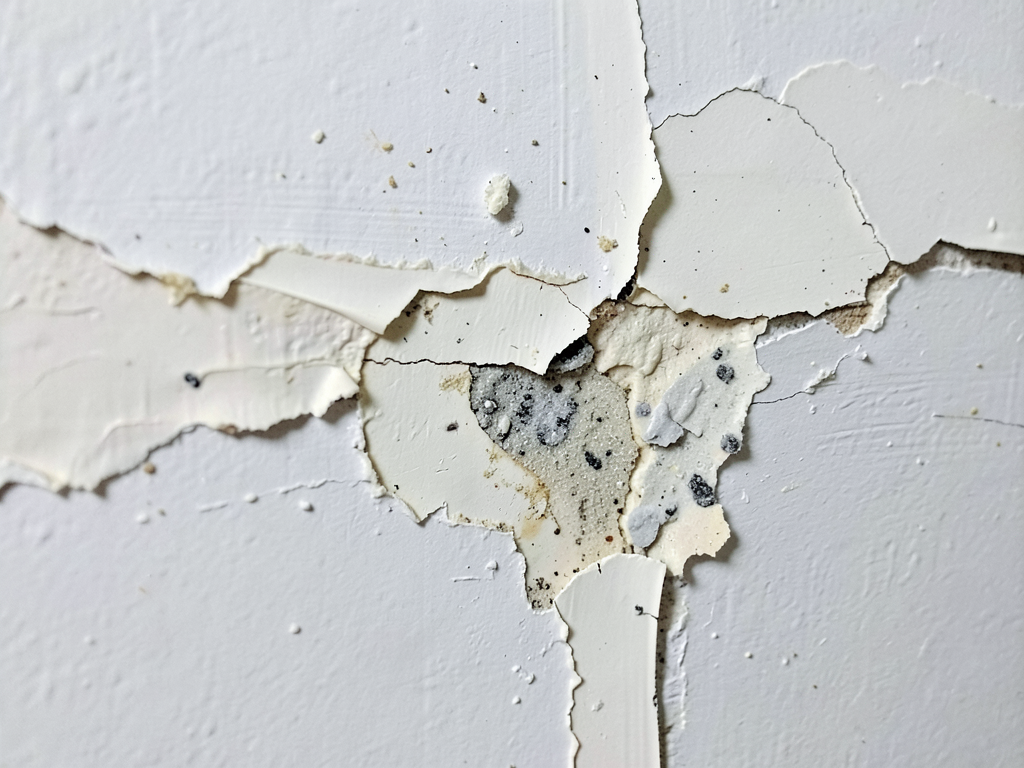
Image description: Close-up view of damaged drywall joint compound showing typical aging patterns and potential asbestos-containing material in a Providence basement.
The science of friable asbestos during water damage restoration
Friability determines asbestos danger level. Non-friable materials like floor tiles or cement board contain asbestos fibers bound in a solid matrix. Water damage can break down these bindings, creating friable conditions where fibers easily release into air. The Joint Compound Analysis shows that even small amounts of water exposure can weaken the binder in pre-1980 mud, making it friable during demolition. When technicians remove water-damaged drywall, the act of cutting, sanding, or breaking releases microscopic fibers. These fibers measure 0.1 to 10 microns in diameter – small enough to penetrate deep into lung tissue. The Rhode Island Department of Health requires HEPA filtration units that capture 99.97% of particles 0.3 microns or larger. Professional containment uses negative air pressure to prevent fiber escape. The physics of water-damaged asbestos means that materials appearing intact may still pose severe risks once disturbed.
Professional testing and inspection process in Providence
Certified asbestos inspectors follow a systematic approach to testing water-damaged homes. The process begins with a visual survey to identify suspect materials. Inspectors collect bulk samples using wet methods to minimize fiber release. Each sample receives a unique identifier and chain-of-custody documentation. Samples go to RIDOH-approved laboratories for PLM analysis. Results typically return within 24-48 hours. The inspection report details material locations, asbestos content percentages, and recommended abatement strategies. Providence homeowners receive documentation showing which areas require professional abatement versus those safe for standard restoration work. The inspection fee ranges from $300 to $800 depending on home size and material quantity. This cost pales compared to potential health risks and legal liability from improper handling. Atlas Water Damage Restoration coordinates testing with local certified inspectors who understand Providence’s housing stock and RIDOH requirements.
Safe demolition and containment procedures
Professional asbestos abatement follows strict protocols under OSHA Class II standards. Technicians wear disposable coveralls, respirators with P100 filters, and gloves. The work area receives polyethylene sheeting and duct tape to create airtight containment. HEPA air scrubbers run continuously, creating negative pressure that prevents fiber escape. Water misting keeps materials damp during removal, reducing airborne particles. Removed materials go into sealed, labeled containers for hazardous waste disposal. The Rhode Island Department of Environmental Management licenses specific disposal facilities that accept asbestos waste. After removal, the area undergoes thorough cleaning with HEPA vacuums and wet wiping. Clearance testing verifies fiber levels meet safety standards before containment removal. The entire process typically takes 2-5 days depending on damage extent and material quantity. Professional contractors maintain liability insurance covering asbestos-related incidents. OSHA Asbestos Standards and Safety Requirements.
Image description: Professional water damage restoration crew setting up negative air pressure containment with HEPA filtration units in a Providence residential basement.
Insurance coverage and claims for asbestos discovery
Standard homeowner’s insurance policies often exclude asbestos abatement costs. However, if asbestos discovery occurs during covered water damage restoration, some policies may provide partial coverage. The key factor is whether the water damage itself triggered the claim. Providence homeowners should document all communications with insurance adjusters about asbestos findings. Some policies include pollution exclusion clauses that specifically exclude asbestos. Others may cover testing costs but not removal. The Rhode Island Department of Insurance regulates these exclusions and provides consumer guidance. Professional restoration companies like Atlas Water Damage Restoration work directly with insurance providers to navigate coverage questions. They provide detailed documentation showing testing results, abatement plans, and final clearance reports. This documentation supports claims for covered portions of the work. Homeowners should review their policies annually and consider adding asbestos endorsement coverage for older homes. Finding the Most Reliable Water Damage Restoration Experts in Providence.
Steps to take when you suspect asbestos in water-damaged walls
Immediate action protects your family from asbestos exposure. First, stop all demolition work immediately. Do not attempt to dry or remove water-damaged materials yourself. Turn off your HVAC system to prevent fiber circulation through ductwork. Close doors to contain the area and keep family members away. Contact a certified asbestos inspector through the RIDOH website or call (401) 222-3961. While waiting for professional help, document the damage with photos for insurance purposes. Do not disturb materials or create dust. If water continues leaking, try to stop the source without touching damaged areas. Keep children and pets completely away from the affected zone. Contact your insurance company to report the situation and start the claims process. Professional restoration companies offer 24/7 emergency response and can coordinate testing and initial containment measures. Get Immediate 24/7 Emergency Water Extraction in Downtown Providence.
Health risks and long-term effects of asbestos exposure
Asbestos exposure causes diseases that may take 15-50 years to develop. Mesothelioma, a rare cancer affecting the lung lining, has no cure and poor survival rates. Lung cancer risk increases proportionally with exposure duration and fiber concentration. Asbestosis causes progressive lung scarring that impairs breathing capacity. These diseases affect not only primary exposed individuals but also family members through secondary exposure from fibers carried on clothing. The Rhode Island Department of Health tracks asbestos-related disease cases and provides resources for affected residents. Early detection through regular medical screening helps improve outcomes for those with known exposure history. The latency period means current health problems may trace back to exposures decades earlier. Professional abatement eliminates ongoing exposure risks but cannot reverse past exposure. This underscores the importance of proper handling during water damage restoration.
Local disposal facilities and hazardous waste protocols
Rhode Island maintains strict protocols for asbestos waste disposal. The Rhode Island Resource Recovery Corporation operates the only approved landfill for asbestos-containing materials in the state. The facility requires 24-hour advance notice for asbestos deliveries. Waste must be packaged in 6-mil polyethylene bags or sealed containers with proper labeling. Transportation requires manifests tracking waste from origin to disposal. The RIDOH inspects disposal facilities regularly to ensure compliance. Providence residents cannot transport asbestos waste in personal vehicles. Licensed hazardous waste transporters handle all asbestos material movement. Disposal fees range from $50 to $150 per cubic yard depending on material type and volume. The entire process from removal to final disposal creates a documented chain of custody. This documentation proves proper handling and protects homeowners from liability.
Cost factors for asbestos testing and abatement in Elmwood
Testing and abatement costs vary based on several factors. Home size directly impacts testing time and sample quantity needed. Larger homes require more samples to ensure complete coverage. Material accessibility affects labor costs – materials behind walls or in tight spaces increase removal time. The asbestos content percentage influences abatement complexity. Higher percentages require more stringent containment measures. Providence’s older housing stock often contains multiple asbestos-containing materials, increasing overall project scope. Current market rates for testing range from $300 to $800. Abatement costs typically run $15 to $30 per square foot of affected area. A complete project for an average Elmwood home might cost $3,000 to $8,000 total. These costs often overlap with necessary water damage restoration, potentially reducing overall expenses. Professional companies provide detailed cost breakdowns showing testing, containment, removal, and disposal line items.
Comparing DIY testing kits versus professional inspection
DIY asbestos testing kits seem appealing but carry significant risks and limitations. These kits cost $30 to $100 but provide unreliable results. Home testing lacks proper chain-of-custody documentation required for legal compliance. Users risk fiber release during sample collection, creating exposure hazards. Laboratory analysis quality varies widely among kit providers. Professional inspection offers comprehensive advantages. Certified inspectors use proper PPE and wet collection methods. They understand building materials and can identify suspect areas accurately. Professional testing includes detailed reports with material locations and content percentages. The RIDOH recognizes only professional testing for regulatory compliance. Insurance companies and abatement contractors require professional documentation. While DIY kits cost less upfront, the potential health risks and legal liabilities far outweigh initial savings. Professional inspection provides peace of mind and regulatory compliance. Reliable Help for Sump Pump Failures and Flooding in Smith Hill.
- Stop All Work Immediately
Evacuate the area and prevent anyone from disturbing water-damaged materials.
- Turn Off HVAC Systems
Prevent asbestos fiber circulation through ductwork and throughout the home.
- Contact Certified Inspector
Call RIDOH-licensed professionals for testing and documentation.
- Document Damage
Take photos and notes for insurance claims without disturbing materials.
- Arrange Professional Abatement
Only licensed contractors should handle confirmed asbestos-containing materials.
Frequently Asked Questions
How can I tell if my Elmwood home contains asbestos?
Homes built before 1980 in Elmwood likely contain asbestos in drywall joint compound, ceiling textures, or insulation. The only way to confirm presence is professional testing using Polarized Light Microscopy analysis at certified laboratories.
Is it safe to stay in my home during asbestos abatement?
No. Professional containment requires complete area isolation with negative air pressure. Residents must vacate the home during removal work and clearance testing. The containment area remains sealed until final air quality verification passes safety standards.
Will my insurance cover asbestos removal costs?
Coverage varies by policy. Some exclude asbestos entirely while others may cover testing if discovered during a covered water damage claim. Review your policy and contact your insurance provider immediately after discovery.
Protecting your family and property
Water damage in older Elmwood homes requires careful handling to avoid asbestos exposure. The combination of aging materials and water degradation creates serious health risks during demolition. Rhode Island regulations require professional testing before any renovation work begins in pre-1980 structures. The testing process identifies asbestos-containing materials and guides safe removal procedures. Professional abatement follows strict protocols using HEPA filtration and negative air pressure containment. While costs may seem high, they pale compared to potential health consequences and legal liabilities from improper handling. Elmwood homeowners should view professional testing as essential insurance for family health and property protection. When water damage strikes, immediate professional response prevents both structural damage and asbestos exposure risks.
Take action now to protect your Elmwood home
Water damage emergencies require immediate professional response. If you suspect asbestos in your water-damaged Elmwood home, do not wait. Stop all work immediately and contact certified professionals. Atlas Water Damage Restoration provides 24/7 emergency response with certified technicians who understand Rhode Island asbestos regulations. Our team coordinates testing, containment, and safe removal following RIDOH protocols. We work directly with insurance companies to navigate coverage questions and provide detailed documentation for your claim. Every minute counts when water damages your home and potentially disturbs asbestos-containing materials. Call (401) 262-8400 now for immediate assistance. Our Providence-based team responds quickly to Elmwood and surrounding neighborhoods. Don’t risk your family’s health or face legal liability from improper asbestos handling. Professional help is just one call away.
Local resources for Elmwood homeowners
Rhode Island Department of Health Asbestos Control Program provides licensing information and complaint procedures. RIDOH maintains a list of certified inspectors and abatement contractors at their Providence office. The Rhode Island Resource Recovery Corporation handles asbestos waste disposal at their Johnston facility. Local testing laboratories offer PLM analysis with 24-48 hour turnaround times. Providence building inspectors can provide guidance on permit requirements for renovation projects. The Providence Public Library maintains historical records showing home construction dates for neighborhood research. These resources help homeowners make informed decisions about asbestos testing and removal. Professional restoration companies maintain relationships with these local resources to streamline the testing and abatement process for clients. Protecting Your Historic Fox Point Home from Water Damage and Mold.
Understanding your legal responsibilities
Rhode Island law places clear responsibilities on property owners regarding asbestos. The discovery of asbestos during renovation work triggers mandatory abatement requirements. Property owners cannot simply abandon asbestos-containing materials in place during demolition. Disclosure requirements apply when selling homes with known asbestos. Failure to disclose can result in lawsuits and financial liability. Contractors working on pre-1980 homes must verify asbestos testing before beginning work. Homeowners bear ultimate responsibility for ensuring compliance with RIDOH regulations. Professional documentation from certified inspectors provides legal protection and demonstrates due diligence. Understanding these responsibilities helps Elmwood homeowners navigate the complex intersection of water damage restoration and asbestos regulations.
Future prevention and home maintenance
Regular home maintenance reduces water damage risks and potential asbestos exposure. Annual roof inspections catch leaks before they cause interior damage. Proper gutter maintenance directs water away from foundations. Basement waterproofing prevents moisture intrusion in Elmwood’s clay-rich soil areas. Plumbing inspections identify aging pipes before catastrophic failures occur. When planning renovations on older homes, schedule asbestos testing before demolition begins. This proactive approach prevents emergency situations and allows proper planning for safe material handling. Professional maintenance contracts provide regular inspections and early problem detection. These preventive measures protect both your home’s structure and your family’s health from water damage and asbestos risks.
The importance of professional certification
Professional certification demonstrates competence in asbestos handling and water damage restoration. The Institute of Inspection Cleaning and Restoration Certification (IICRC) offers water damage restoration credentials. The Environmental Protection Agency provides lead-safe certification for renovation work. Rhode Island requires specific asbestos abatement licenses through the RIDOH. These certifications require ongoing education to maintain current knowledge of regulations and best practices. Professional companies invest in training and equipment to ensure safe, effective service delivery. Certification provides homeowners assurance that technicians understand proper procedures and safety protocols. When selecting restoration contractors, verify current certifications and licensing through official state registries.
Emergency response planning for Elmwood residents
Creating an emergency response plan helps Elmwood homeowners act quickly when water damage occurs. Keep contact information for certified asbestos inspectors and restoration companies readily available. Document your home’s construction date and known building materials. Review your insurance policy annually to understand coverage limits and exclusions. Create a home inventory with photos for insurance claims. Establish relationships with local restoration companies before emergencies occur. This preparation enables rapid response when disasters strike. Professional companies offer emergency response plans tailored to individual homes and neighborhoods. These plans include priority response protocols and direct communication channels for urgent situations.
Community impact and neighborhood considerations
Water damage and asbestos issues affect entire neighborhoods beyond individual homes. Shared walls in Elmwood’s older multi-family structures mean problems can spread between units. Community education about asbestos risks helps neighbors make informed decisions about renovations and repairs. Local contractors understand neighborhood-specific building patterns and common material types. Professional restoration companies contribute to community safety by following proper protocols and educating homeowners. Neighborhood associations can organize informational sessions about water damage prevention and asbestos awareness. These community efforts create safer living environments for all Elmwood residents while preserving the neighborhood’s historic character.
Technology and modern restoration techniques
Modern restoration technology improves safety and efficiency in asbestos handling. Thermal imaging cameras detect moisture behind walls without destructive testing. Moisture meters measure water content at various depths to guide drying strategies. Advanced HEPA filtration systems capture microscopic particles more effectively than older equipment. Digital documentation systems track material handling from discovery through final disposal. Mobile apps enable real-time communication between technicians, inspectors, and homeowners. These technological advances reduce exposure risks and improve project outcomes. Professional companies invest in current technology to provide safer, more effective service to Providence homeowners.
{
“@context”: “https://schema.org”,
“@type”: “BlogPosting”,
“headline”: “The hidden risk of asbestos during water damage demo in an older Elmwood home”,
“description”: “Older Elmwood homes built before 1980 face serious asbestos risks during water damage demolition. Learn Rhode Island regulations, testing requirements, and safe removal steps.”,
“wordCount”: 3090,
“datePublished”: “2026-05-21T10:31:00.000Z”,
“dateModified”: “2026-05-21T10:31:00.000Z”,
“inLanguage”: “en-US”,
“mainEntityOfPage”: {
“@type”: “WebPage”,
“@id”: “https://atlaswaterdamagerestorationprovidence.com”
},
“publisher”: {
“@type”: “LocalBusiness”,
“name”: “Atlas Water Damage Restoration Providence”,
“url”: “https://atlaswaterdamagerestorationprovidence.com”
},
“author”: {
“@type”: “Organization”,
“name”: “Atlas Water Damage Restoration Providence”,
“url”: “https://atlaswaterdamagerestorationprovidence.com”
},
“image”: {
“@type”: “ImageObject”,
“url”: “https://atlaswaterdamagerestorationprovidence.com/wp-content/uploads/2026/03/the-hidden-risk-of-asbestos-during-water-damage-de-1.png”
}
}
{
“@context”: “https://schema.org”,
“@type”: “LocalBusiness”,
“name”: “Atlas Water Damage Restoration Providence”,
“url”: “https://atlaswaterdamagerestorationprovidence.com”,
“address”: {
“@type”: “PostalAddress”,
“addressLocality”: “Providence”
},
“areaServed”: {
“@type”: “City”,
“name”: “Providence”
}
}
{
“@context”: “https://schema.org”,
“@type”: “FAQPage”,
“mainEntity”: [
{
“@type”: “Question”,
“name”: “How can I tell if my Elmwood home contains asbestos?”,
“acceptedAnswer”: {
“@type”: “Answer”,
“text”: “Homes built before 1980 in Elmwood likely contain asbestos in drywall joint compound, ceiling textures, or insulation. The only way to confirm presence is professional testing using Polarized Light Microscopy analysis at certified laboratories.”
}
},
{
“@type”: “Question”,
“name”: “Is it safe to stay in my home during asbestos abatement?”,
“acceptedAnswer”: {
“@type”: “Answer”,
“text”: “No. Professional containment requires complete area isolation with negative air pressure. Residents must vacate the home during removal work and clearance testing. The containment area remains sealed until final air quality verification passes safety standards.”
}
},
{
“@type”: “Question”,
“name”: “Will my insurance cover asbestos removal costs?”,
“acceptedAnswer”: {
“@type”: “Answer”,
“text”: “Coverage varies by policy. Some exclude asbestos entirely while others may cover testing if discovered during a covered water damage claim. Review your policy and contact your insurance provider immediately after discovery.”
}
}
]
}
{
“@context”: “https://schema.org”,
“@type”: “HowTo”,
“name”: “Steps for Safe Water Damage Restoration”,
“step”: [
{
“@type”: “HowToStep”,
“position”: 1,
“name”: “Stop All Work Immediately”,
“text”: “Evacuate the area and prevent anyone from disturbing water-damaged materials.”
},
{
“@type”: “HowToStep”,
“position”: 2,
“name”: “Turn Off HVAC Systems”,
“text”: “Prevent asbestos fiber circulation through ductwork and throughout the home.”
},
{
“@type”: “HowToStep”,
“position”: 3,
“name”: “Contact Certified Inspector”,
“text”: “Call RIDOH-licensed professionals for testing and documentation.”
},
{
“@type”: “HowToStep”,
“position”: 4,
“name”: “Document Damage”,
“text”: “Take photos and notes for insurance claims without disturbing materials.”
},
{
“@type”: “HowToStep”,
“position”: 5,
“name”: “Arrange Professional Abatement”,
“text”: “Only licensed contractors should handle confirmed asbestos-containing materials.”
}
],
“image”: “https://atlaswaterdamagerestorationprovidence.com/wp-content/uploads/2026/03/the-hidden-risk-of-asbestos-during-water-damage-de-1.png”
}
{
“@context”: “https://schema.org”,
“@type”: “BreadcrumbList”,
“itemListElement”: [
{
“@type”: “ListItem”,
“position”: 1,
“name”: “Home”,
“item”: “https://atlaswaterdamagerestorationprovidence.com”
},
{
“@type”: “ListItem”,
“position”: 2,
“name”: “Blog”,
“item”: “https://atlaswaterdamagerestorationprovidence.com/blog”
},
{
“@type”: “ListItem”,
“position”: 3,
“name”: “The hidden risk of asbestos during water damage demo in an older Elmwood home”
}
]
}
{
“@context”: “https://schema.org”,
“@type”: “Service”,
“serviceType”: “Water Damage Restoration”,
“provider”: {
“@type”: “LocalBusiness”,
“name”: “Atlas Water Damage Restoration Providence”,
“url”: “https://atlaswaterdamagerestorationprovidence.com”
},
“areaServed”: {
“@type”: “City”,
“name”: “Providence”
},
“description”: “Older Elmwood homes built before 1980 face serious asbestos risks during water damage demolition. Learn Rhode Island regulations, testing requirements, and safe removal steps.”
}