
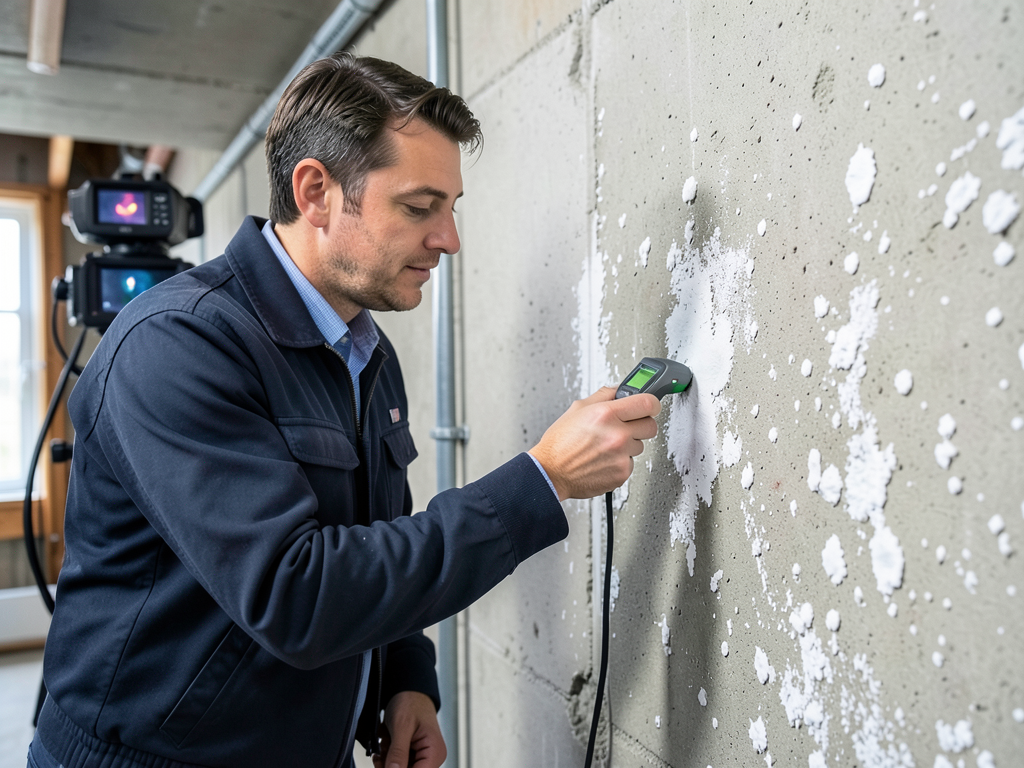
Identifying efflorescence and white powder on your Oak Hill basement walls
Seeing white powdery deposits on your Oak Hill basement walls can be alarming. You might wonder if it’s toxic mold or a sign of serious structural damage. The truth is that in Providence’s older neighborhoods, this chalky white substance is often efflorescence—a harmless mineral deposit that forms when water moves through masonry and leaves behind salt crystals. But it can also be early-stage white mold, which poses real health risks. This guide will help you identify what you’re seeing, understand why Oak Hill basements are prone to these issues, and know when to call a professional restoration team. Professional Mold Removal and Remediation Services for East Side Homeowners.
The Simple Water Test: Identifying the Substance
The fastest way to tell if you’re dealing with efflorescence or mold is the water test. Spray a small amount of clean water directly onto the white powder. If it dissolves and disappears, you’re looking at efflorescence. If it remains or changes color, you likely have mold growth.. Read more about Getting rid of standing water in your Warwick crawl space for good.
Another quick diagnostic is the vinegar test. Apply a few drops of white vinegar to the powder. Efflorescence will fizz and bubble as the acid reacts with the alkaline mineral salts. Mold will show no reaction.
Visual inspection also helps. Efflorescence typically forms in flat, powdery patches that wipe off easily with a dry cloth. Mold tends to grow in irregular patterns with a fuzzy or thread-like texture and may have a musty odor.
What is Efflorescence?
Efflorescence occurs when water-soluble salts migrate through porous masonry materials like concrete, brick, or stone. In Providence’s climate, this process is accelerated by seasonal freeze-thaw cycles and high groundwater levels common in neighborhoods near Narragansett Bay.
The science behind it involves capillary action. Water moves through tiny pores in your basement walls, dissolving mineral salts from the mortar, concrete, or surrounding soil. As the water evaporates at the surface, it leaves these salts behind as visible white deposits.. Read more about Managing the spring thaw and basement seepage in your North Providence backyard.
Common salts include calcium carbonate, sodium sulfate, and magnesium sulfate. These minerals are naturally present in Rhode Island’s clay soils and in the Portland cement used in many older Providence foundations.
When the White Powder is Actually White Mold
Not all white basement growths are harmless efflorescence. White mold can appear as a powdery substance but has distinct characteristics that signal a biohazard. Sclerotinia, a common white mold in damp basements, starts as white cottony patches that can turn yellow or brown as they mature.
Early-stage Aspergillus and Penicillium can also appear white before developing color. These molds release spores that can trigger respiratory issues, especially in children, elderly individuals, and those with asthma or allergies.
The key difference is that mold grows and spreads over time, while efflorescence remains static once moisture conditions stabilize. If you notice the white substance spreading, changing color, or developing a musty smell, you’re likely dealing with mold rather than mineral deposits.
Why Providence Basements Are Prone to This
Oak Hill’s location in Providence places it in a unique geological zone where high water tables meet aging infrastructure. The neighborhood sits on dense clay soils that retain moisture and create hydrostatic pressure against basement walls.
Many Oak Hill homes were built between 1900 and 1950 with fieldstone or brick foundations that are particularly susceptible to water infiltration. These older materials have larger pores and less waterproofing than modern concrete, making them perfect pathways for moisture migration.
Providence’s climate compounds the problem. Our humid summers keep relative humidity levels above 70% for months, while winter freeze-thaw cycles cause expansion and contraction that opens new pathways for water entry. The Narragansett Bay’s tidal influence also affects groundwater levels, causing seasonal fluctuations that push moisture through basement walls.
Long-Term Solutions and Prevention
Addressing efflorescence and preventing mold requires tackling the moisture source. Start with exterior solutions like improving grading around your foundation so water flows away from the house. Extend downspouts at least six feet from the foundation and clean gutters regularly.
Interior waterproofing options include applying masonry sealers that create a vapor barrier, though these work best when combined with exterior drainage improvements. A properly sized dehumidifier can maintain relative humidity below 60%, making conditions inhospitable for mold growth.
For persistent moisture problems, consider interior drainage systems that collect water before it reaches your walls. These systems channel water to a sump pump, which then discharges it away from your foundation. Rhode Island Building Code Section 1804.3 requires proper drainage for below-grade spaces to prevent structural damage.
Professional Restoration vs. DIY Cleanup
While wiping away efflorescence is a simple DIY task, knowing when to call professionals can save you thousands in structural repairs. Call a restoration expert if you notice horizontal or stair-step cracks in your foundation, widespread mold covering more than 10 square feet, or persistent musty odors even after cleaning. EPA mold information.
Professional moisture mapping using thermal imaging can reveal hidden water pathways that aren’t visible to the naked eye. This technology shows temperature differences that indicate moisture presence, helping identify problem areas behind finished walls.
If your basement has experienced flooding or if you have pre-1978 construction, professional assessment becomes even more critical. Lead paint mitigation requirements under EPA regulations mean that disturbing old painted surfaces during cleanup could create additional hazards. Flood Cleanup & Extraction.
Understanding the Health Implications
The distinction between efflorescence and mold isn’t just about appearance—it’s about health. While efflorescence is chemically inert and harmless to touch, mold spores can cause allergic reactions, respiratory infections, and in some cases, more serious health conditions.
White mold in basements is particularly concerning because air naturally rises through your home via the stack effect. Mold spores released in your basement can circulate throughout your living spaces, affecting air quality on upper floors.
Children and elderly family members are most vulnerable to mold-related health issues. If anyone in your household experiences increased coughing, sneezing, or asthma symptoms that worsen when spending time in the basement, professional testing is warranted.
Cost Factors for Professional Assessment
Professional basement moisture assessments in Providence typically range from $300 to $800 depending on your home’s size and the complexity of the inspection. This cost includes moisture meter readings at multiple depths, thermal imaging scans, and a detailed report with recommendations.
More comprehensive services like mold testing or structural evaluation can add $200 to $500 to the initial assessment. While this might seem expensive, early detection of moisture problems can prevent $5,000 to $20,000 in structural repairs down the line.
Many homeowners insurance policies cover professional assessments if they’re part of a claim for water damage. Document any visible issues with photos before your inspection to support potential insurance claims.
Seasonal Considerations for Oak Hill Homes
Providence’s seasonal weather patterns create distinct challenges for basement moisture management. Spring thaw often reveals winter damage as frozen ground thaws and releases trapped moisture. Summer humidity can cause condensation on cool basement walls, mimicking efflorescence.
Fall is actually the best time for professional assessment because water tables are typically at their highest after summer rains, revealing the true extent of any moisture problems. Winter can mask issues as frozen ground creates a temporary barrier to moisture movement.
Understanding these seasonal patterns helps you time your interventions. Exterior waterproofing projects are best completed in late spring or early fall when ground conditions are favorable and rainfall is moderate.
Local Building Practices and Their Impact
Providence’s building boom in the early 20th century established construction patterns that still affect basement moisture today. Many Oak Hill homes were built using lime-based mortars that are more porous than modern cement mortars, allowing greater water infiltration.
The practice of backfilling foundations with excavated soil rather than clean gravel creates another moisture pathway. This native soil often contains high clay content that expands when wet, increasing pressure against basement walls and forcing moisture through even tiny cracks.
DIY Maintenance Between Professional Inspections
Between professional assessments, you can monitor your basement’s moisture condition using simple tools. A hygrometer costs under $20 and helps track relative humidity levels. Readings consistently above 60% indicate conditions favorable for mold growth.
Visual inspections every few months can catch developing problems early. Look for new efflorescence deposits, changes in existing patterns, or signs of water staining. Even small changes can indicate shifting moisture conditions that need attention.
Simple maintenance like keeping basement windows closed during humid weather and using exhaust fans when running moisture-producing appliances can significantly reduce condensation problems.
Insurance Considerations for Water Damage
Understanding your insurance coverage before problems arise can save you stress during emergencies. Standard homeowners policies typically cover sudden water damage from burst pipes but exclude gradual moisture infiltration that leads to efflorescence or mold growth.
Some insurers offer endorsements for basement water backup coverage, which can be valuable for Oak Hill homes given our high water table. This coverage often includes professional remediation services if water enters through floor drains or sump pump failures. Reliable Help for Sump Pump Failures and Flooding in Smith Hill.
Advanced Diagnostic Tools
Professional restoration companies use advanced tools that go beyond visual inspection. Moisture meters with deep-probe capabilities can detect water within concrete walls up to four inches deep, revealing problems before they become visible on the surface.
Infrared cameras detect temperature variations that indicate moisture presence, even through finished walls. This technology can identify hidden leaks behind drywall or under flooring without destructive testing.
Environmental Factors Affecting Your Basement
Beyond your home’s immediate surroundings, regional environmental factors influence basement moisture. Providence’s proximity to Narragansett Bay means tidal fluctuations can affect groundwater levels up to a mile inland, potentially increasing hydrostatic pressure against basement walls. Get Immediate 24/7 Emergency Water Extraction in Downtown Providence.
Urban development in surrounding areas can alter natural drainage patterns. New construction, parking lots, and other impervious surfaces increase runoff that can overwhelm older drainage systems designed for less dense conditions.
The Cost of Inaction
Ignoring white powder on your basement walls can lead to escalating problems. What starts as simple efflorescence can progress to spalling, where the concrete surface begins to flake and deteriorate. This process weakens structural integrity and creates more pathways for moisture entry.
Mold that establishes itself in damp conditions will continue to spread, potentially affecting indoor air quality throughout your home. Remediation costs increase significantly once mold infiltrates HVAC systems or living spaces above the basement.
Making the Right Choice for Your Home
Deciding between DIY monitoring and professional intervention depends on several factors. The age and value of your home, the extent of visible moisture problems, and your family’s health considerations all play a role in this decision.
For historic Oak Hill homes with significant value, professional assessment provides documentation that can be valuable for insurance purposes or future sale. Even if immediate remediation isn’t needed, establishing a baseline condition helps track changes over time. Protecting Your Historic Fox Point Home from Water Damage and Mold.
Frequently Asked Questions
Is efflorescence dangerous to my health?
Efflorescence is not harmful to touch or breathe. It’s simply mineral salt deposits left behind when water evaporates. However, its presence indicates moisture problems that could lead to mold growth if left unaddressed.
How much does professional basement waterproofing cost in Providence?
Professional waterproofing costs vary widely based on the scope of work. Simple interior sealing might cost $1,000 to $3,000, while comprehensive exterior waterproofing with drainage systems can range from $8,000 to $15,000. Most homeowners in Oak Hill spend between $4,000 and $7,000 for effective moisture control.
Can I paint over efflorescence to hide it?
Painting over efflorescence without addressing the moisture source is ineffective. The salts will eventually push through paint, causing bubbling and peeling. Any successful paint job requires cleaning the surface, allowing it to dry completely, and using masonry-specific primers designed for damp environments.. Read more about Cleaning mold from bathroom tile grout after a heavy leak in your Cranston home.
Ready to Identify Your Basement Issue?
Don’t let white powder on your basement walls become a bigger problem. Our Providence-based team can quickly determine whether you’re dealing with harmless efflorescence or potentially dangerous mold growth. We serve Oak Hill and all surrounding Providence neighborhoods with same-day assessments and professional recommendations.
Call (401) 262-8400 today to schedule your basement inspection. Our certified technicians use advanced diagnostic tools to identify moisture sources and provide lasting solutions tailored to Providence’s unique climate challenges. Early intervention can save you thousands in structural repairs and protect your family’s health.
Pick up the phone and call (401) 262-8400 before the next storm hits. Our team is ready to help you understand exactly what’s happening in your basement and provide clear, professional recommendations for addressing any issues we find. For more information, visit IICRC certification standards.
{
“@context”: “https://schema.org”,
“@type”: “BlogPosting”,
“headline”: “Identifying efflorescence and white powder on your Oak Hill basement walls”,
“description”: “Is the white powder on your Oak Hill basement walls harmless efflorescence or dangerous mold? Learn the water test, health risks, and Providence-specific solutions.”,
“wordCount”: 2107,
“datePublished”: “2026-04-12T15:13:00.000Z”,
“dateModified”: “2026-04-12T15:13:00.000Z”,
“inLanguage”: “en-US”,
“mainEntityOfPage”: {
“@type”: “WebPage”,
“@id”: “https://atlaswaterdamagerestorationprovidence.com”
},
“publisher”: {
“@type”: “LocalBusiness”,
“name”: “Atlas Water Damage Restoration Providence”,
“url”: “https://atlaswaterdamagerestorationprovidence.com”
},
“author”: {
“@type”: “Organization”,
“name”: “Atlas Water Damage Restoration Providence”,
“url”: “https://atlaswaterdamagerestorationprovidence.com”
},
“image”: {
“@type”: “ImageObject”,
“url”: “https://atlaswaterdamagerestorationprovidence.com/wp-content/uploads/2026/03/identifying-efflorescence-and-white-powder-on-your-1.png”
}
}
{
“@context”: “https://schema.org”,
“@type”: “LocalBusiness”,
“name”: “Atlas Water Damage Restoration Providence”,
“url”: “https://atlaswaterdamagerestorationprovidence.com”,
“address”: {
“@type”: “PostalAddress”,
“addressLocality”: “Providence”
},
“areaServed”: {
“@type”: “City”,
“name”: “Providence”
}
}
{
“@context”: “https://schema.org”,
“@type”: “FAQPage”,
“mainEntity”: [
{
“@type”: “Question”,
“name”: “What is Efflorescence?”,
“acceptedAnswer”: {
“@type”: “Answer”,
“text”: “Efflorescence occurs when water-soluble salts migrate through porous masonry materials like concrete, brick, or stone. In Providence’s climate, this process is accelerated by seasonal freeze-thaw cycles and high groundwater levels common in neighborhoods near Narragansett Bay.”
}
},
{
“@type”: “Question”,
“name”: “Is efflorescence dangerous to my health?”,
“acceptedAnswer”: {
“@type”: “Answer”,
“text”: “Efflorescence is not harmful to touch or breathe. It’s simply mineral salt deposits left behind when water evaporates. However, its presence indicates moisture problems that could lead to mold growth if left unaddressed.”
}
},
{
“@type”: “Question”,
“name”: “How much does professional basement waterproofing cost in Providence?”,
“acceptedAnswer”: {
“@type”: “Answer”,
“text”: “Professional waterproofing costs vary widely based on the scope of work. Simple interior sealing might cost $1,000 to $3,000, while comprehensive exterior waterproofing with drainage systems can range from $8,000 to $15,000. Most homeowners in Oak Hill spend between $4,000 and $7,000 for effective moisture control.”
}
},
{
“@type”: “Question”,
“name”: “Can I paint over efflorescence to hide it?”,
“acceptedAnswer”: {
“@type”: “Answer”,
“text”: “Painting over efflorescence without addressing the moisture source is ineffective. The salts will eventually push through paint, causing bubbling and peeling. Any successful paint job requires cleaning the surface, allowing it to dry completely, and using masonry-specific primers designed for damp environments.”
}
},
{
“@type”: “Question”,
“name”: “Ready to Identify Your Basement Issue?”,
“acceptedAnswer”: {
“@type”: “Answer”,
“text”: “Don’t let white powder on your basement walls become a bigger problem. Our Providence-based team can quickly determine whether you’re dealing with harmless efflorescence or potentially dangerous mold growth. We serve Oak Hill and all surrounding Providence neighborhoods with same-day assessments and professional recommendations.”
}
}
]
}
{
“@context”: “https://schema.org”,
“@type”: “BreadcrumbList”,
“itemListElement”: [
{
“@type”: “ListItem”,
“position”: 1,
“name”: “Home”,
“item”: “https://atlaswaterdamagerestorationprovidence.com”
},
{
“@type”: “ListItem”,
“position”: 2,
“name”: “Blog”,
“item”: “https://atlaswaterdamagerestorationprovidence.com/blog”
},
{
“@type”: “ListItem”,
“position”: 3,
“name”: “Identifying efflorescence and white powder on your Oak Hill basement walls”
}
]
}
{
“@context”: “https://schema.org”,
“@type”: “Service”,
“serviceType”: “Water Damage Restoration”,
“provider”: {
“@type”: “LocalBusiness”,
“name”: “Atlas Water Damage Restoration Providence”,
“url”: “https://atlaswaterdamagerestorationprovidence.com”
},
“areaServed”: {
“@type”: “City”,
“name”: “Providence”
},
“description”: “Is the white powder on your Oak Hill basement walls harmless efflorescence or dangerous mold? Learn the water test, health risks, and Providence-specific solutions.”
}